UI/UX Manager · Product Design × AI

Design that leads. Detail that proves it.

I lead design across digital products: the vision, the systems, and the thousand small decisions that make them work. Lately, my sharpest focus is AI, where the hardest design problem isn’t the interface. It’s trust.

Obsessed with the details you’ll never notice.
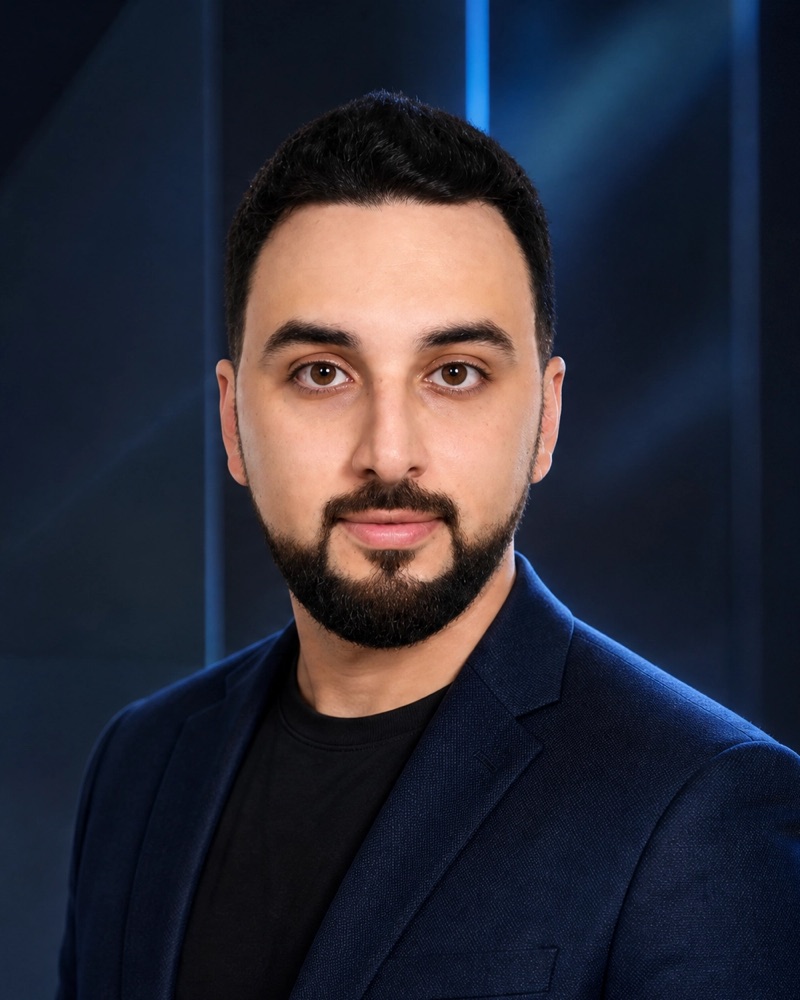
Samer Haddad
Portrait · coming soon
SAMER HADDAD
RoleDesign Manager
FocusProduct · AI · Systems
Based inKhobar, SA
Craft since2010
·Selected clients & partners
Aramco HUMAIN Bupa Arabia ARGAS

Design work across 12+ years, through BeyondAI, TCS, and agency teams, spanning energy, government, insurance, and fintech.

01How I work

Three convictions behind every decision I lead.

01

The user is the brief

Every roadmap, metric, and model output gets tested against one question: does it make a real person’s moment better?

In practiceOn one engagement, before changing a single screen, I sat beside the client’s team and heard their needs first-hand.

02

Details are the strategy

The 4px, the easing curve, the empty state at 2am. Craft isn’t decoration. It’s how trust is built or broken.

In practiceMy first test on a new engagement was one date picker. I designed every state, and engineering shipped it as drawn.

03

Vision, made shippable

I turn ambiguity into systems teams can build on: a clear direction that survives contact with reality.

In practiceOne project’s look became the design system other companies’ teams now build the program on.

02Right now · the frontier I’m on

The interface is easy. The moment of doubt is the design.

Good AI design isn’t about the answer. It’s about what happens when the answer is wrong. Most products are built for the moment the machine gets it right; I design for the moment a person has to decide whether to believe it. That’s where trust is won or lost, and it’s the part almost nobody designs on purpose.

One answer, shown two ways · demo, fictional data
QuestionWhich supplier caused the most delays last quarter?
AI answerSupplier C, with 14 delayed shipments.
Sources
Delivery log · 212 rowsQ3 logistics report
Confidence
Medium
Missing
The last three weeks of data
It sounds sure. Would you act on it?Same answer. Now you can decide how far to trust it.
See how it shows up in the work →

03Selected work

Details are confidential.
The thinking isn’t.

Client work · anonymized by request
The turnaroundEnterprise AI platform · Energy

Joined a flagship engagement at a turning point. Worked session by session with the client’s decision-makers, and delivered past expectations: everything from desktop tools to an immersive showcase wrapped in one continuous curved screen.

3months to full client trust

The problem

Requirements came from two directions, the client’s team and their advisors, and rarely matched. Expectations kept rising, nobody was managing them, and every fix was layered on top of the last.

What I did

  1. 01

    Watched before I touched anything

    A week of listening showed a clarity problem, not a design problem. So I took a desk beside the client’s team, heard the needs first-hand, and made allies of their advisors.

  2. 02

    Won small before going big

    The first test was a complex date picker. I adapted a proven open-source component rather than invent one, covered every state, and engineering shipped it as designed.

  3. 03

    Made design the last gate

    The build worked but drifted from the design, and the client was the one catching it. So we reviewed every screen, raised tickets, and nothing shipped without our sign-off.

The result

The design problems were fixed in the first month. Trust took three. At their next meeting with my company’s leadership, the client thanked them for the appointment, and the engagement grew well past its MVP: into desktop tools and a room-sized showcase.
The room-sized interfaceImmersive executive wall · Energy

Turned dense operational data into a cinematic story for a wall that wraps the room. Then the AI layer made it dynamic: a canvas that rebuilds itself in answer to a question, designed within hard engineering limits.

270°of canvas, one continuous story

The problem

A curved wall wraps the room where the program is shown to visitors and senior guests. It had to carry a vast amount of operational data across four scenes and still feel like a show, not a dashboard stretched across a wall.

What I did

  1. 01

    Asked for an example, not a brief

    The client kept asking for “3D”. A reference they liked showed what they meant: flat design with depth, perspective, and shadow. Once it had a name, I could build it.

  2. 02

    Designed it before it existed

    The wall didn’t exist yet. From two numbers, roughly 20 metres by 2, I set the ratio everyone designed and built to. Once it was installed, we had one week to get it right.

  3. 03

    Rebuilt it when AI arrived

    It began as four fixed scenes. Then an AI assistant joined, able to rebuild the wall around any question. So I re-cut the design into blocks that work in any arrangement.

The result

After one week of tuning on the real screen, the wall went live, and it still runs today. Its depth, its motion, and the way it responds and presents its data became what everyone talked about, and its visual language became the standard for every platform after it.

One language, many teamsDesign standard · Program-wide

The visual language I created was adopted as the standard for the entire program, for every platform built after it. I turned it into a shared design system, trained one vendor’s designers on it, and handed it to the rest.

1design language across every vendor

The problem

The client wanted one look across the whole program: every platform, including those other companies were building. A language that had grown inside one team’s work had to become something any designer could pick up and use.

What I did

  1. 01

    Put the foundations in one file

    Everything the language is made of went into one Figma file: the colours, the type, the 3D illustrations, and the icons. One source, so no team had to guess or redraw.

  2. 02

    Shared the work, not just the rules

    Rules alone don’t show how the pieces fit together. So a second file held my complete designs, open to every team to study and draw from when building their own screens.

  3. 03

    Trained one team, then let go

    I walked one company’s designers through it myself. The others took the two files and started from there. After the handover, each team carried on with its own work.

The result

There was no pushback to manage. The client had asked for it, and the designers welcomed it because they liked the work. Today other companies’ teams build the program’s platforms on a language that began as one project’s look.

Every portfolio, one screenFintech · Mobile app

Led design for a mobile app that brings investment portfolios held with different brokers into one place. Started from a blank page: shaped the product, sourced live market prices, and hired the people who built it.

0→1product, from idea to market

The problem

People who invest through more than one broker never see everything they own in one place. This app set out to show it on one screen. It began as a blank page: no product, no team, and no ready source of live prices for the Saudi market.

What I did

  1. 01

    Made many portfolios read as one

    The hardest part was the core view: several portfolios under one total, with a clear way to move between them and add more. It had to stay simple and still look good.

  2. 02

    Chased down live prices

    Live Saudi stock prices were hard to source. I found a provider with a streaming API, then kept sending them the companies missing from their list, and they added them.

  3. 03

    Hired the people to build it

    I hired the backend developer and the iOS developer, then a marketer and a brand designer. Each choice weighed skill against a start-up budget and the need to stay flexible.

The result

The first version reached the App Store in under six months, and development continued almost daily. It showed Saudi prices one to five minutes behind the market, when brokers’ own apps typically made non-premium customers wait fifteen.

0°90°180°270°DOORVIEWERS
Abstract study · one canvas wrapping the room, from 0° to 270° · the original stays under NDA

More work lives under NDA. Book a walkthrough →

0
Years in the industry
0
Design teams built & mentored
0
Products shipped end-to-end
0
AI products across energy, government & enterprise

04Career

The path here.

2024 – Now
UI/UX ManagerBeyondAI · AI

Hired to turn a flagship account around. Today: a team of 4 designers, program-wide design standards, and a client who asks for me by name.

2022 – 2024
Senior UI/UX DesignerTCS · Aramco.ai

Chose the bigger problem over the bigger title: stepped back from a manager seat to design for Aramco.ai, and ended up the de facto design lead of the TCS team anyway.

2022
Product Design ManagerQannas

Shaped a multi-broker investment app far beyond design: hired the technical team and bridged business and engineering, end to end.

2021 – 2022
UI/UX DesignerAlawadiliah

A quiet, heads-down year on internal products: the kind of reps that sharpen the craft.

2014 – 2021
Foundations · Web & ProductArts2Art · TDS

Where the craft turned professional: web design first, then product work across in-house and outsourced teams.

2010 – 2014
The forum that started everythingSelf-taught · Freelance, alongside a day job

Learned to build my own forum instead of waiting for the professional who was too busy to help. Strict standards from day one, and a bet on HTML5 while Flash died. Two years later, he was the one asking me to work.

05Leading design

I don’t just design screens. I design the team that designs them.

Becoming a manager didn’t move me away from craft. It multiplied it. My job is to protect the conditions where great work happens: clear direction, high standards, and enough safety for designers to do their boldest thinking. Today I lead a team of 4 designers across several products. I don’t protect the pixels; I protect the people who care about them.

“I still design every day. Now it’s the team.”
  • 01
    Set the bar, not the pixelsA shared definition of “good” the team owns, so quality survives without me in every review.
  • 02
    Vision people can act onTurning fuzzy strategy into a direction each designer can make decisions from, independently.
  • 03
    Grow designers, not outputMentoring toward judgment, the skill that outlasts any single project.

06Thinking out loud

Notes on design, AI, and leading both.

  • AI × UXDesigning for the moment of doubtIn the works
  • CraftThe details users never see (but always feel)In the works
  • LeadershipFrom maker to multiplierIn the works

07About

The short version of a long obsession.

Samer Haddad

My path into design didn’t start with a degree, or even a job. It started with a teenage forum I wanted to build. The professional we relied on was too busy to help, so instead of waiting I taught myself, the strict way: XHTML and web standards when nobody was checking, then HTML5 the moment it appeared, while Flash was dying around it. Within a couple of years, the same professional was asking me to work with him. I’ve been chasing the same question ever since:

Why do some products just feel right?

That question pulled me deeper: from websites into product design, and from designing alone into leading the teams that design together. A computer-science background keeps me fluent in how things are actually built, not just how they look.

Today my sharpest focus is AI, and the question hasn’t changed. It’s just gotten harder to answer. Outside the work, I’m the person who notices the kerning on a restaurant menu. It’s a condition; there’s no cure.

Clarity over cleverness People before pixels Details are non-negotiable
BSc, Computer Science UX Management: Strategy & Tactics · IxDF 5 Master Classes in AI design & leadership · IxDF

08Get in touch

Let’s design something
worth remembering.

Open to conversations about design leadership, AI product work, and the occasional good idea.

Currently leading design at BeyondAI · open to advisory & speaking

[email protected]